


Feast in Da Nang Goes Viral — Guests Adore the “National Heritage Dish”
- Oct 31, 2025
- 3 min read
Besides familiar dishes like Vietnamese pork sausage (chả lụa), roasted chicken, and shrimp rolls (ram tôm đất), a recent video showcasing a death anniversary feast in Da Nang has captivated viewers for its impressive spread — featuring specialties such as bánh rò, mì Quảng, bê thui, and xôi đường.
The two-minute video, filmed at a family memorial feast, quickly gained hundreds of thousands of interactions online. Netizens left enthusiastic comments:
“Our family in Da Nang makes the same dishes for death anniversaries — all homemade!” “I’m only watching, but it looks so delicious. Every dish is mouthwatering!”
A Traditional Feast in the Heart of Central Vietnam
The video was posted by Nguyễn Thị Tú Tú, who shared that it was recorded at her family’s home in Nông Sơn commune, Da Nang City (formerly part of Quảng Nam Province).
According to Tú, the selection of dishes varies depending on local customs, family traditions, and budget.
At her family’s gatherings, the offerings typically include steamed rice, chả lụa, spring rolls (chả giò), bamboo shoot soup (canh măng), and red sticky rice (xôi gấc) — alongside a wide range of local specialties that embody the culinary soul of Quảng Nam.
These range from salads (pork ear salad, lotus stem salad, banana blossom salad, bamboo shoot salad) to main dishes (boiled or stir-fried pork, braised or roasted chicken, fried or braised fish, shrimp rolls, bitter melon soup, taro stem soup with pork bones), as well as cold platters (bê thui – grilled veal, bánh đúc – steamed rice cake) and hearty dishes like mì Quảng, bánh tét, bánh rò, and bún bò.
The feast even includes sweet treats and fruits such as xôi đường (sweet sticky rice), jelly, and seasonal fruits — served either as appetizers or desserts.
“Every dish reflects the creativity and skill of the cook, as well as the richness of our local culinary heritage,” Tú explained.
Distinctive Dishes That Define a Region
Among the standout items is bánh rò — a traditional cake often seen in feasts throughout the former Quảng Nam area. At first glance, it resembles bánh chưng or bánh tét, but it’s shaped like a small pyramid and filled with mung beans.
Another crowd favorite is xôi đường (sweet sticky rice), made from glutinous rice, sugar, ginger, and black beans.
Locals steam the rice, then pack it into a square wooden mold lined with banana leaves. Once pressed, the top is sprinkled with roasted sesame seeds, creating a glossy, fragrant layer. The cake is then cut into neat squares or triangles — each serving enough for one or two people.

“It looks so appealing that people often wrap some to take home after the feast,” Tú shared.
From Everyday Fare to Cultural Heritage
Another indispensable dish on the Da Nang feast table is bê thui Cầu Mống — a grilled veal specialty originating from Cầu Mống village (Điện Phương commune, former Điện Bàn district).
The meat is roasted until medium rare, giving it a rosy pink hue and crispy skin. It’s typically served with rice paper, fresh herbs, and a special dipping sauce.
In 2013, bê thui Cầu Mống was officially recognized by the Vietnam Records Organization as a nationally certified specialty.
The Star of the Feast: Mì Quảng — A National Intangible Heritage
Among all the dishes, Tú’s personal favorite is mì Quảng, the most iconic dish of Central Vietnam — and in 2024, it was officially listed as a National Intangible Cultural Heritage of Vietnam.
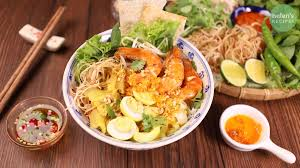
“Mì Quảng can be enjoyed at any time of day, and even though it’s a familiar dish for locals, it’s always present at our family gatherings,” Tú said.
The dish features wide rice noodles soaked in a flavorful, slightly concentrated broth, typically served with tender chicken, pork, shrimp, or even frog meat — topped with roasted peanuts, herbs, and crispy sesame crackers.
Despite the abundance of dishes on the table, guests rarely leave without having at least one bowl of mì Quảng to finish the meal.
“It’s a simple yet deeply comforting dish. Even though I eat it all the time, I still look forward to it at every feast,” Tú smiled.


Comments